

These Historic French Shoes Have Achieved Cult-Like Status. Here's Why - gearpatrol.com |
- These Historic French Shoes Have Achieved Cult-Like Status. Here's Why - gearpatrol.com
- Shoes needed for third-world countries - Pratt Tribune
- 2020 NBA All-Star Game Sneaker Rankings: Kawhi Leonard debuts signature shoe; LeBron James shows off new kicks - CBS Sports
- Kenya's Enda running shoes gets VC funding to rival Nike, Adidas - Quartz Africa
| These Historic French Shoes Have Achieved Cult-Like Status. Here's Why - gearpatrol.com Posted: 18 Feb 2020 01:01 AM PST You've spotted it on the train, on the street during fashion week, in the window of a very niche store and in a Japanese fashion magazine: a shoe with a moccasin-style toe and a little green tag. Chunky is certainly an apt descriptor, but clunky suits the very senior-looking shoe far better. The brand, Paraboot, has been operating in France since 1908. Before hiring his first employees, Rémy-Alexis Richard grew up in the small village of Izeaux at the foot of the French Alps during the late 1800s. He worked at factories that produced shoes for contractors in Paris. Richard eventually became a contractor himself and sold his designs for production in the very same factories. He would soon marry a wealthy woman named Juliette Pontvert and the two pursued the business together under the name Richard-Pontvert.
The First World War would pull him away from his shoe business for a few years: he built and repaired shoes for the French army. After the war ended, he bought a factory back in the same town of Izeaux as a means to better control the manufacturing process. In 1926, Richard traveled to the United States where he encountered vulcanized rubber boots. He brought the innovation back to his Alpine factories and combined this process with his method for applying notched soles to mountain boots, which at the time were affixed to wooden soles. Notched soles provided more traction on the terrain and, when applied to rubber, produces even greater grip. Today, the company still produces its soles in-house, a distinct feature of Paraboot's business. In fact, when Richard registered the name Paraboot in 1927, he named it after the Brazilian port of Para, where the brand still gets its latex rubber for its soles. In 1945, as factories were closing or pivoting to cheaper production methods involving plastic, glue and lightweight materials, Paraboot decided to stay the course and continue making shoes using Norwegian welt and Goodyear welt construction. It was at this time Paraboot had developed its iconic Michael shoe, a Tyrolean-style shoe originating from the Alpine region of Tyrol built for traversing the mountainous terrain. This hefty shoe is likely the style you've seen on the feet of industry insiders and tastemakers.
Paraboot's popularity spread from farms and postal routes to extreme sports like mountain climbing, cross-country skiing and motorbiking. But the brand's ascension eventually came crashing down to bankruptcy in the 1970s. Thankfully, that wasn't the end of the story. As slim dark suits and sleek shoes fell out of fashion in the 1980s, the Michael came back into vogue and saved Paraboot. It was around this time that Paraboot first made its way to the United States at a legendary store known as Louis' of Boston. Gary Drinkwater, founder and owner of menswear retailer Drinkwater's, was working for Louis at the time and was instrumental in bringing the shoes Stateside. "The unique quality of Paraboot," Drinkwater notes, "is that they have a long-lasting, enduring quality to them because they were originally built for the field, they were built for sports, for industrial reasons. Then they pivoted to being a pedestrian brand offering styles like the Avignon, the Chambord and the Michael."
Michael by Paraboot $527As far as materials are concerned, a shoe's upper is the most important and Paraboot's selection of leathers is among the finest. The brand prides itself on using leathers from France as well as shell cordovan from the United States. Often, a brand new pair of boots will appear dusty, even dry. During the tanning process, the leather is impregnated with tannins, waxes, oils and fats. These ingredients help give the leather its strength and resilience while also helping it to resist water, a valuable property to have when trekking through the alps. These fats will often rise to the surface of the leather in a process known as 'blooming' and is a sign of the leather's health. The fats will buff out with a few swipes with a shoe brush. Paraboot has a distinct advantage over many other companies because of its vertical production. While other shoemakers source their soles from companies like Vibram, Dainite and Cortina, Paraboot produces its own rubber soles as it's been doing since the early 20th century. Having in-house production of its own materials means Paraboot has greater control over the quality of the product, ultimately resulting in a better shoe. Though not a Paraboot invention, the Norwegian welt is a hallmark of the brand's most-loved styles and is often associated with the brand. Like the famed Goodyear welt, the Norwegian welt is a construction method that attaches the shoe's upper with its sole and allows the style to be easily resoled. Unlike the Goodyear welt, which is a flat welt that reaches beneath the shoe's upper, the Norwegian welt attaches entirely to the exterior of the shoe. This technique prevents water from reaching into the crevice between the welt and the upper.
Avoriaz by Paraboot $605This waterproof design is often incorporated into sportswear-related shoes like hiking boots which demand greater protection from the elements. Admittedly, the Norwegian welt is less discreet compared to the Goodyear welt, which is fitting for outdoor shoes. Though the chunky profile and dense rubber outsole wouldn't win any points against other walking shoes, Paraboot was marketed toward hikers and avid walkers since the beginning. Paraboot's range of styles is vast swinging from terrain-prepared hiking boots to beach-ready sandals to boardroom appropriate dress shoes. But its bread-and-butter continues to be chunky walking shoes. The Michael and Chambord are two of the brand's most popular styles and often sit on store shelves next to Alden and Red Wing. While Alden evokes a dressier sensibility and Red Wing holds strong ties to workwear, Paraboot squarely occupies the space in-between. "The sole is so chunky, the Norwegian welt, the scalloping — it's got its own personality," says Phillip Yi, founder and owner of Totem Brand Co. "Originally, they were meant for walking and hiking in the French Alps. It's definitely a hybrid that plays between both of those two worlds of dress and workwear." In the last two decades, Paraboot has built up another wave of popularity, cementing itself further as a cult classic. Ever ahead of the trends, the Japanese market has been longtime fans of the French bootmaker, frequently featuring its shoes in magazine spreads in publications like Fudge Magazine the now-defunct Free & Easy. The Michael has been a point of inspiration for countless brands, eliciting imitators from Clarks, Padmore & Barnes, Mephisto, Kleman and more. But the brand's cachet draws collaborations with notable brands in seasons past including Arpenteur, Aime Leon Dore, Barbour and Beams. This year marks the 111th anniversary and the 75th anniversary of its quintessential Michael. And though Drinkwater doesn't expect the brand to ever be as popular as Red Wing, Dr. Martens or Alden, he thinks it will always occupy a unique place in the market. He bought his first pair over three decades ago and still wears them to this day. He says, "1985 to today, where can you really find a pair of shoes that lasts that long?" For a brand that's survived two World Wars, a bankruptcy, countless fashion trends and, for Drinkwater, 35 years of wear, Paraboot is here to stay. Note: Purchasing products through our links may earn us a portion of the sale, which supports our editorial team's mission. Learn more here. |
| Shoes needed for third-world countries - Pratt Tribune Posted: 17 Feb 2020 06:46 PM PST Pratt Kiwanis Club gathers shoes for donation to the needy. Many Pratt area residents have already taken advantage of a chance to clean out their closets for a good cause, and Pratt Kiwanis club members encourage more to check for good, gently used or even new, unworn shoes that they might donate to an ongoing shoe collection project.  |
| Posted: 17 Feb 2020 10:44 AM PST The NBA All-Star Game is where the league's biggest stars show off their shoe game. And that's exactly what they did Sunday night. The exhibition did not disappoint in terms of sneaker heat. We saw the Adidas Yeezy basketball shoe during a game for the first time, Kawhi Leonard debuted his first signature with New Balance and LeBron James teased us all with an alternate colorway of his Nike LeBron 17 "Monstars" kicks. Keep scrolling for the best sneakers from the 2020 All-Star Game. 10. Jayson TatumCeltics youngin' Jayson Tatum made his All-Star Game debut in Chicago and he made sure to have something solid on his feet. Tatum laced up the Jordan 34 SE "Chicago," one of the kicks Jordan Brand released as part of its 2020 All-Star collection. 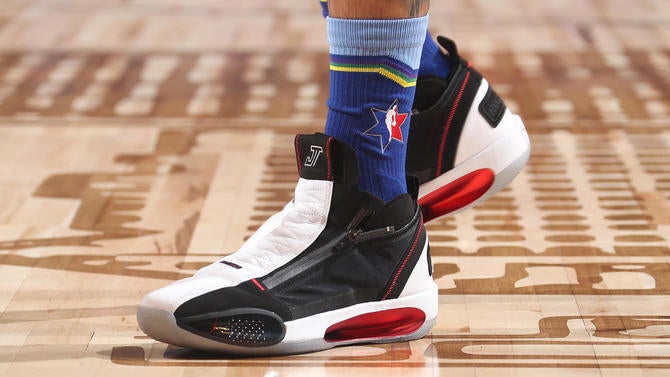 9. Pascal SiakamRaptors forward Pascal Siakam also made his All-Star Game debut on Sunday and he did it with the Nike KD 12 "Don C" on his feet. The shoe is part of Nike's All-Star collection and with Kevin Durant sidelined because of injury, it only makes sense for another star player to show off the kicks Durant would've been wearing if he were on the court. 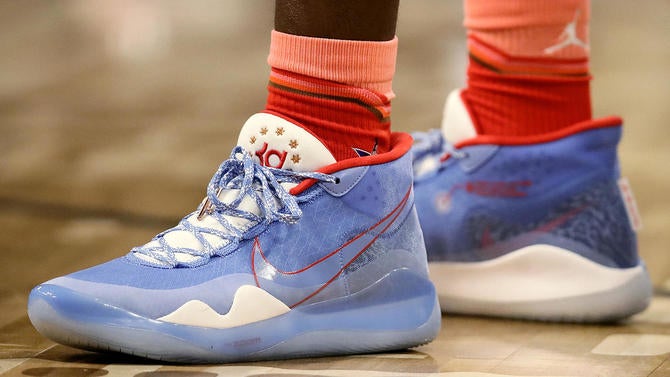 8. Giannis AntetokounmpoBucks star Giannis Antetokounmpo isn't a stranger to the All-Star Game, making his fourth consecutive appearance this season. But Sunday's All-Star outing was a unique one for the Greek Freak seeing as how it was his first as a signature athlete. Antetokounmpo shuffled between a couple pairs of his Nike Zoom Freak 1 sneakers, starting the game with the "What The" colorway before lacing up the "Employee of the Month" colorway from Nike's All-Star collection. 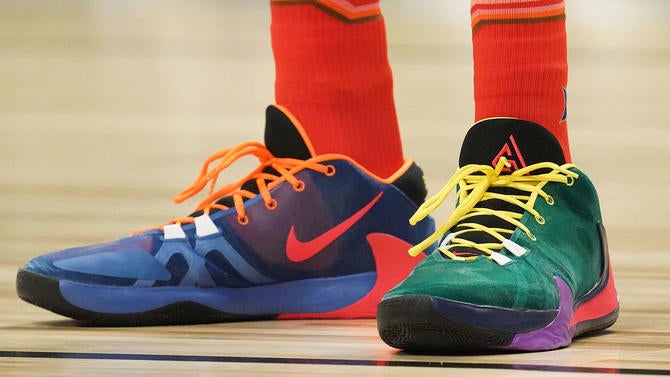 7. Russell WestbrookRockets guard Russell Westbrook laced up his signature Jordan Why Not Zer0.3 "LA Born" sneakers for his ninth All-Star Game appearance on Sunday. The vibrant colorway gives off heavy '90s vibes and the name ties back to Westbrook's California roots. 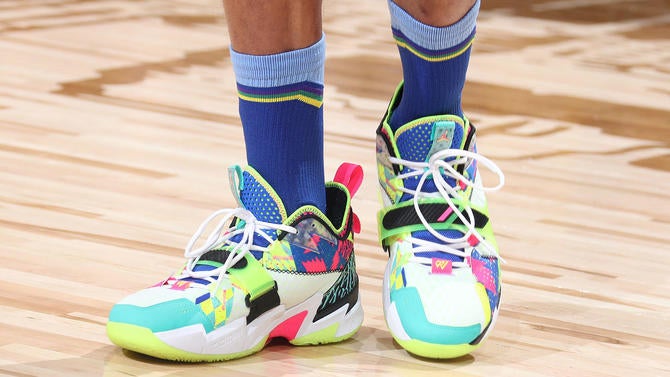 6. Anthony DavisIn his first All-Star Game as a Laker, Anthony Davis continued to pay tribute to the late Kobe Bryant. Davis laced up the Nike Kobe 5 Protro in a Lakers colorway, a sneaker that has not been released publicly to date. Davis has consistently worn Nike Kobe sneakers through the years and has kept that trend going strong this season. 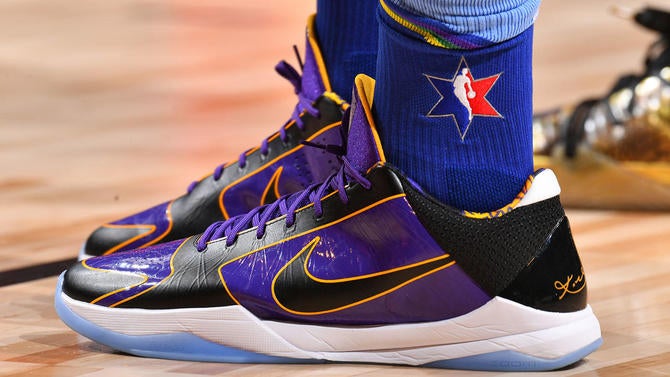 5. Bam AdebayoHeat big man Bam Adebayo won't soon forget this All-Star Weekend. He takes home the trophy for the Skills Challenge and also made his All-Star Game debut. Adebayo went the custom route for his kicks over the weekend, breaking out a special tribute design honoring Kobe Bryant for the game. 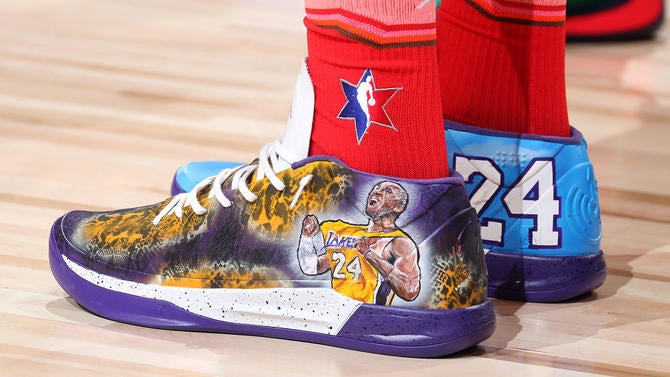 4. Luka DoncicLuka Doncic always looks like he's having a great time. And why wouldn't he be? The second-year star is already getting his first taste of the All-Star Game all while showing off the kicks on his feet. For the game, Doncic went with a Jordan 34 low "Cement" PE, which pays homage to the Jordan 3 kicks Michael Jordan had on his feet when he pulled off his iconic free throw line dunk during the 1988 Slam Dunk Contest. 3. Brandon IngramMaking your first All-Star Game appearance is as exciting a feeling as you can imagine, but Brandon Ingram had way more to be excited about. The 22-year-old got to debut the Adidas Yeezy Quantum basketball sneaker during the All-Star Game AND he got Kanye West, who was sitting courtside in his native Chicago, to sign the shoes before the game. 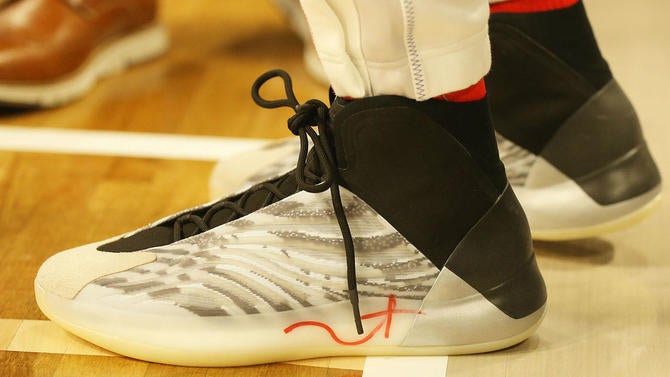 2. Kawhi LeonardNo one had a better All-Star Weekend than Clippers star Kawhi Leonard. With a 30-point outburst, he helped lead Team LeBron over Team Giannis and earned the first Kobe Bryant All-Star MVP trophy. On top of all that, Leonard introduced the world to his first signature sneaker -- the New Balance KAWHI. Leonard continues to be the main building block for New Balance as the brand continues to make waves in its resurgence into the basketball scene. 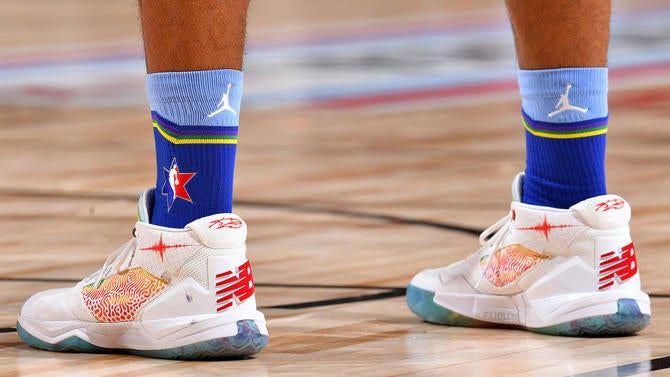 1. LeBron JamesLakers star LeBron James is having an incredible sneaker season. He's showing off new kicks seemingly every night, he's turning back the clock with retros from his long-standing Nike line and whenever we think we have his shoe game figured out he throws us off his scent with a never-before-seen player exclusive. For his 16th(!) All-Star Game, James laced up the Nike LeBron 17 "Monstars" to get the festivities started in Chicago. The shoe, which was released to the public over the weekend, gives you a glimpse at what's coming when he stars in "Space Jam 2." After halftime, James decided to put the kicks we all have access to aside and broke out the LeBron 17 "Mr. Swackhammer," another colorway inspired by the upcoming movie that only The King can get his hands on. That's the type of boss move he's been pulling off all season long. 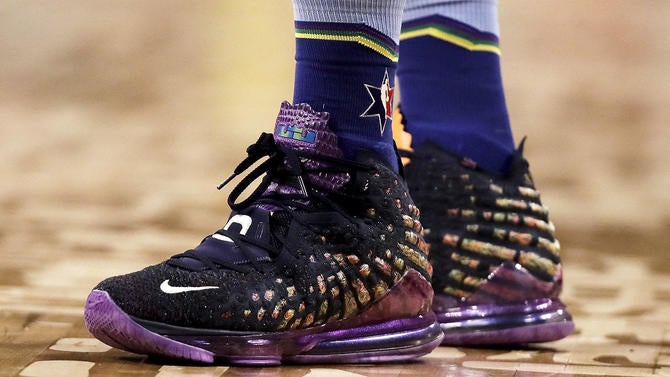  |
| Kenya's Enda running shoes gets VC funding to rival Nike, Adidas - Quartz Africa Posted: 17 Feb 2020 08:04 AM PST Kenyan runners are known worldwide for winning gold medals and breaking world records. But the country's first performance athletic shoe company, Enda, ran into multiples hurdles when trying to convince investors at home and abroad Kenya could become a significant manufacturing hub. Kenyan Navalayo Osembo and British-American Weldon Kennedy co-founded Enda in 2016 with the intention of creating a high-quality product for export and to bring the world's attention to Kenya not only as a home of great runners, but of high-quality manufacturing as well. But it'sbeen a long struggle. The Nairobi-based startup had to demonstrate proof of concept and a potential export market before any investors would bet on the company. Enda began its journey hoping to raise around $500,000 to build a world class team, develop and test its running shoe prototypes and order high-quality material. The founders reached out to around 150 investors and venture capital firms, and quickly ran into fundraising troubles common to Kenyan startups. Many of the international investors Enda contacted had never visited Kenya or Africa and had largely skewed perceptions of what investing in the continent entailed, says Osembo. They were hesitant to put money into Kenya's budding apparel manufacturing sector, questioning why Enda did not rely instead on Chinese or Vietnamese companies who had existing infrastructure and tried-and-tested manufacturing mechanisms. "Everybody makes it in Asia for a reason," says Osembo. "The belief is that they've perfected the whole economies of scale system. So why take it to an African country?" The Kenyan investors Enda approached appeared reluctant to invest in a shoe company, rather than putting their money into real estate or the much-hyped technology startups that earned Nairobi its "Silicon Savannah" moniker.  Courtesy: Enda "When you look at the tech landscape [in Kenya], there's a lot of resources around from a capital perspective. Ecosystem, accelerators and all of that," says Marvin Kiragu, managing partner at Mizizi Capital, a Nairobi investment firm. "But there's none of those kinds of tools and support and resources for consumer startups." Enda raised just enough to create its first prototype from a friends and family angel investment round then decided to pivot to a more creative solution: Enter Kickstarter. In 2016, Enda raised $140,000 from its first Kickstarter campaign. Most of the money went towards making the metal molds that create the midsole of the shoe. One mold cost $3,000 to make, and a unique mold is required for every half shoe size for both men and women. The campaign resulted in Enda's first popular shoe model, the Iten, which launched in 2017. Enda sold out around 6,000 pairs and faced supply chain challenges in restocking the shoe. "If I'm shipping my stuff to the U.S., [it gets there] in a day. If I'm shipping stuff to Kenya, it's taken me…eight weeks before," says Osembo. "It pushes production further, so the customer is getting the stuff four to five months down the line." In March 2019, Enda launched another Kickstarter campaign to create a second shoe. This round produced the Lapatet model, which became the first African company to defeat more than 400 other entrants to win Body & Mind category at the ISPO tradeshow, the largest sports start-up competition in the world held in Munich, Germany. This success raised Enda's profile and its ability to finally raise its first seed funding. Enda raised around $350,000 in a seed funding round from five investors in November. Kenyan-based companies Mizizi Capital and Umoja Rubber Products, one of Africa's largest footwear manufacturers, led the round, which also included three high-net-worth African individuals. The funding will support Enda's production, distribution and marketing. "What we look for, and what we invest in, is young African brands that have demonstrated traction, not just locally but internationally," says Kiragu of Mizizi Capital. "When we look at Enda, we see the potential to build something that could be the Nike for Africa." Enda and its investors hope the round—led by Kenyan investors who put up capital to support a Kenyan brand with a Kenyan co-founder—will inspire other struggling local manufacturing startups. Kenya's president, Uhuru Kenyatta, has prioritized manufacturing as a pillar of his and set ambitious targets to grow manufacturing from 9.8%, where it currently stands, to 15% of GDP by 2022. Kenya's manufacturing sector employs around 303,000 people and accounted for 11.4% of formal employment in 2017. Despite this, Ethiopia and other regional neighbors are outpacing Kenya's growth due to high barriers to entry and the challenges of doing business in Kenya.  Courtesy - Enda A lack of depth of the local supply chain has meant Enda shoes are currently 40% made in Kenya, with the rest made in China. Enda's goal is to bring this up to 100% made in Kenya, which the co-founders believe will bring investment, jobs and industry to the country and help Kenya gain a reputation as a world-class apparel manufacturing nation. This may already be happening. Kenya has been noted as an alternative to shoe manufacturing in China, along with other heavy hitters like Vietnam, Bangladesh and Indonesia. But some factors need to change for Kenya to really take off. IncentivesEnda's founders believe the way Kenya's tax incentives are designed to develop growth in manufacturing actually disincentivize existing local manufacturers. Kenya's Export Processing Zone (EPZ) Act of 1990 created designated export processing zones across the country where new manufacturers could open factories to promote export oriented investments. Because Enda's factory does not lie within an EPZ zone, it does not benefit from perpetual exemption from VAT and customs import duty that EPZ manufacturers enjoy. EPZ companies are also restricted to selling only 20% of their total production locally, a restriction Enda refuses to abide by. "We wanted to take existing Kenyan factories and get them to the point where they're exporting world class goods," says Kennedy. "But the tax incentives are entirely for new foreign direct investments to set up new factories… Why not reward Kenyan factories that are leveling up that are working to drive exports?" In recent months, Kenya's EPZ's have come under fire for the liberal tax breaks they provide to companies. "There's been increasing talk about reducing the amount of tax breaks that have been granted because the EPZ policy has granted a lot of tax breaks to a lot of companies, but it hasn't necessarily paid back in terms of increasing job stimulation," says Judd Murigi, head of research at ICEA LION Asset Management. Sign up to the Quartz Africa Weekly Brief here for news and analysis on African business, tech and innovation in your inbox  |


| You are subscribed to email updates from "shoes" - Google News. To stop receiving these emails, you may unsubscribe now. | Email delivery powered by Google |
| Google, 1600 Amphitheatre Parkway, Mountain View, CA 94043, United States | |



0 Yorumlar